How Player of the Match Decided in Cricket?
How is player of the match decided in cricket? Who picks it, why runs alone mislead, how points systems and impact work, and a fair method any league can use.
Player of the Match: Why the Top Scorer Doesn’t Always Deserve It
Player of the Match Points System Explained
Quick Answer
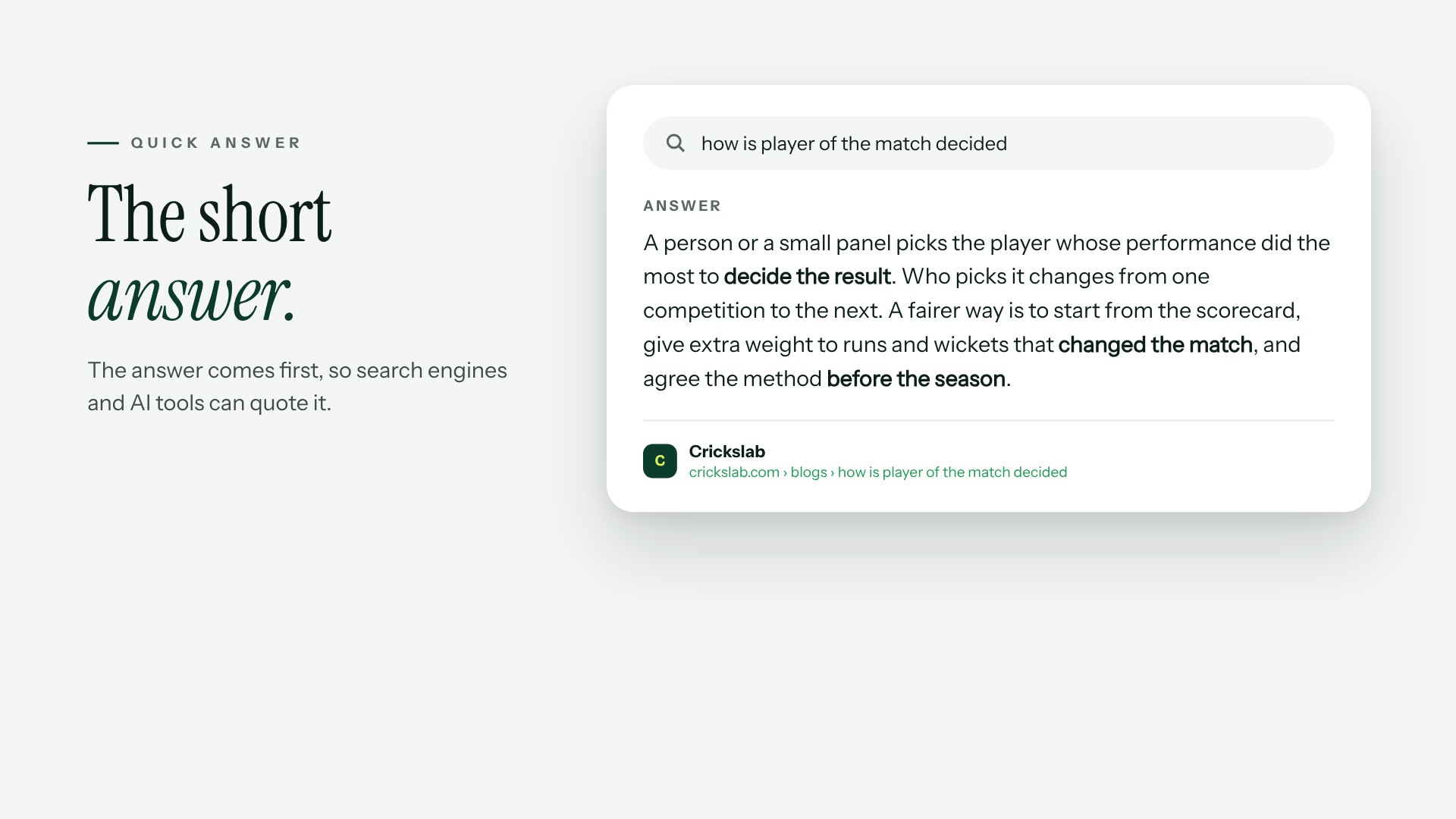
How is player of the match decided? In most cricket, a person or a small panel picks the player whose performance did the most to decide the result. Who picks it, and how, changes from one competition to the next, and very few local leagues write the rules down. A fairer way is to start from the scorecard, give extra weight to runs and wickets that changed the match, and agree the method before the season starts.
Who Decides Player Of The Match Today?
It depends on the competition. In televised cricket, the player of the match award is often chosen by a commentator, a broadcast panel or the organisers. In club and school cricket, it is usually the captains, an umpire, the league secretary or whoever is holding the trophy.
The idea behind it is old and simple: reward the player whose contribution was most critical to the result. The award became a regular part of Test cricket in the 1980s. You will still hear it called man of the match, and many leagues use both names.
Why “Most Runs” Is The Wrong Answer
The quickest way to pick a winner is to look at the highest score. It is also the most common mistake.
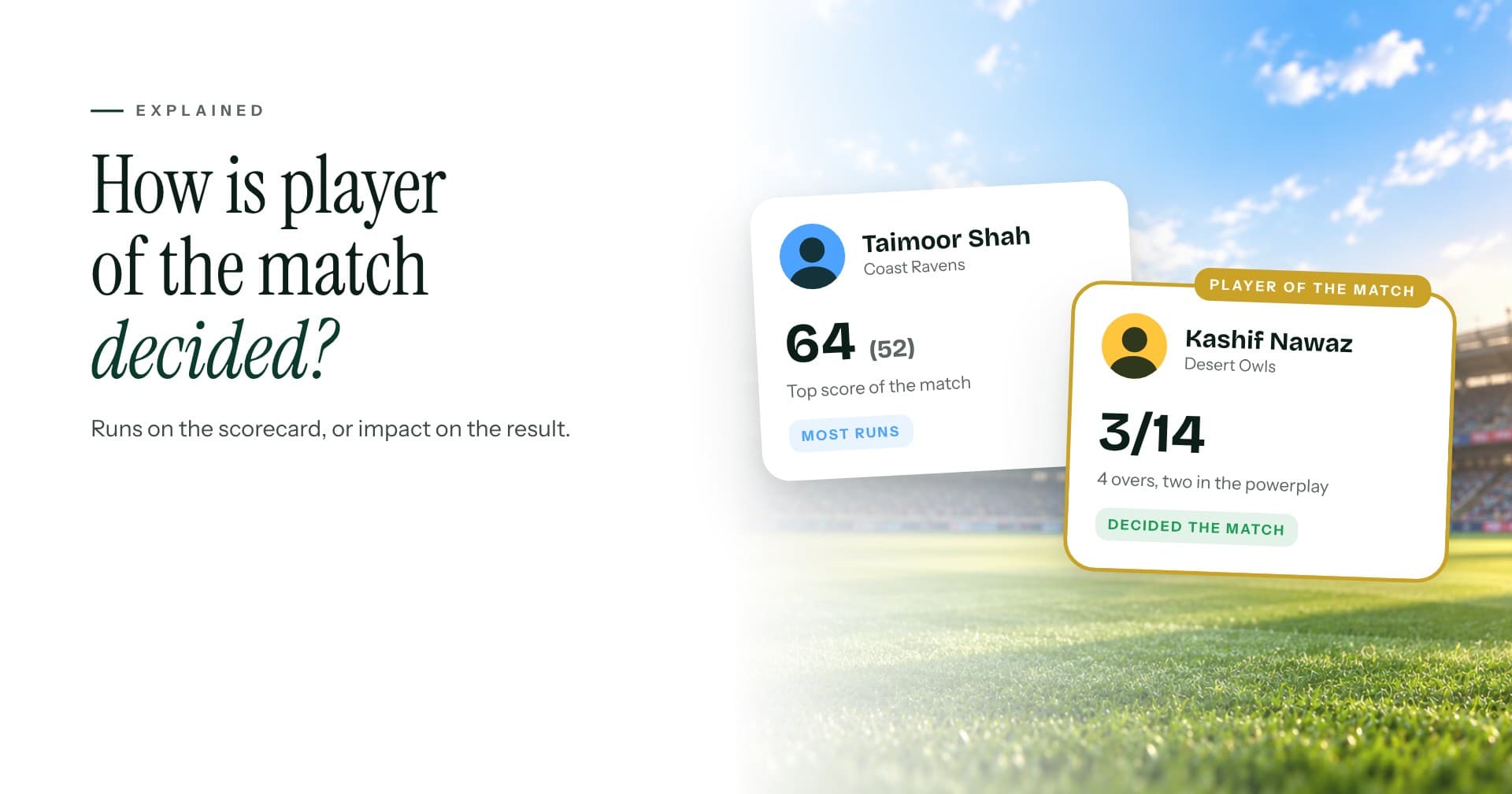
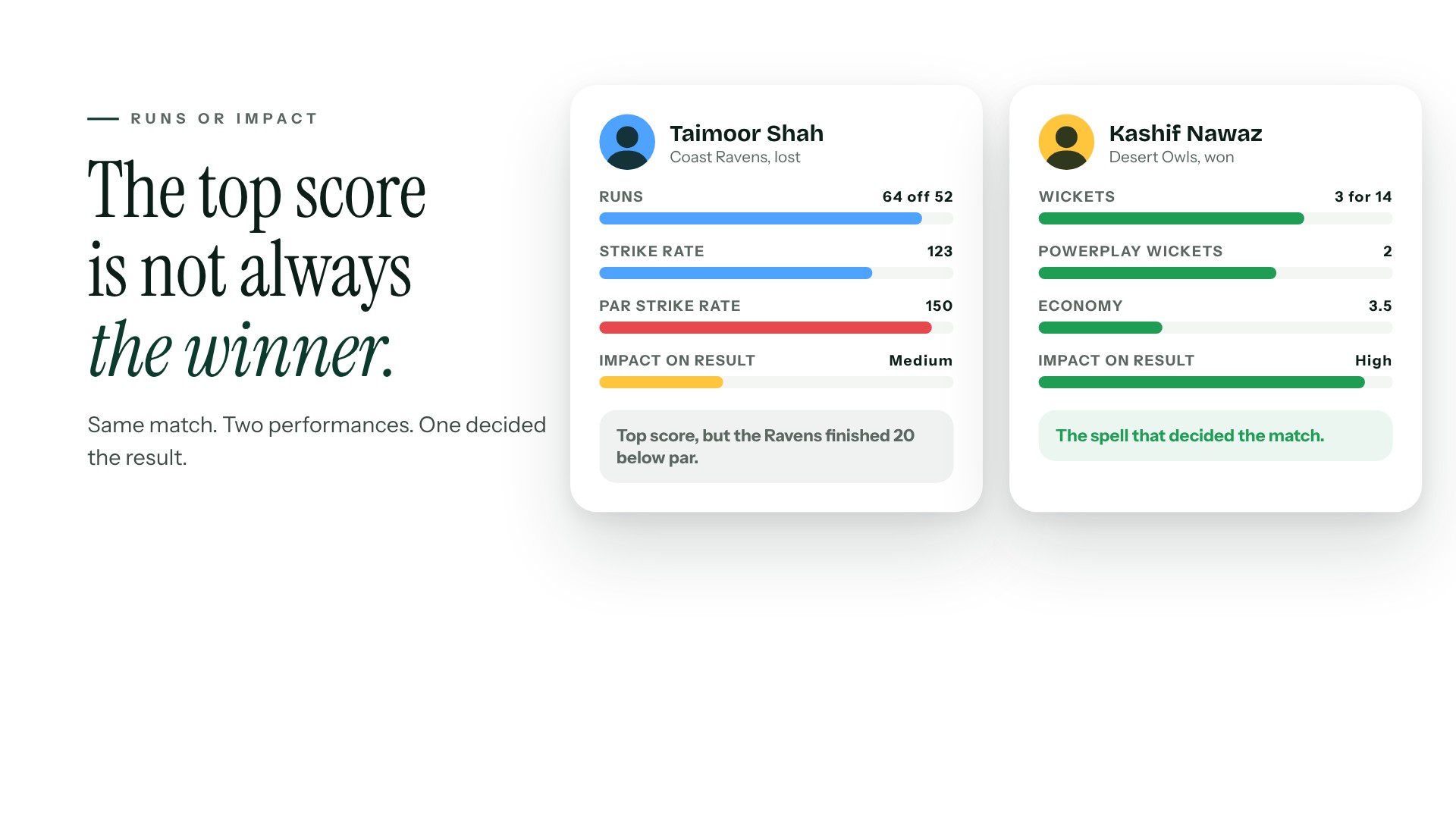
Take an imaginary T20 between the Coast Ravens and the Desert Owls. Taimoor Shah makes 64 off 52 balls for the Ravens. It is the top score of the day. Kashif Nawaz takes 3 for 14 in four overs for the Owls, including two wickets in the powerplay, and the Owls chase the total with an over to spare.
On runs alone, Taimoor wins. But Kashif’s spell is what decided the match. Taimoor’s 64 took 52 balls on a flat pitch, and the Ravens finished about 20 runs below par.
What Is Impact In Cricket?
Impact in cricket means how much a performance changed the result, not just how big it looks on the scorecard. The same figures are worth more or less depending on when they happen.
The phase of the game. Wickets in the powerplay and runs in the last five overs move a T20 more than the same numbers in a quiet middle phase.
The pressure. A 30 in a collapse, or a tight over when the batting side needs 12, counts for more than easy runs when the game is already won.
The par. A strike rate of 120 is excellent on a slow pitch where the par score is 130, and slow on a flat one where 200 is par.
Who you got out. Dismissing the set top scorer matters more than the number eleven.
Cricket media now publish impact based ratings that turn runs and wickets into one score built on exactly these ideas, and those ratings often disagree with the official award.
How Does A Player Of The Match Points System Work?
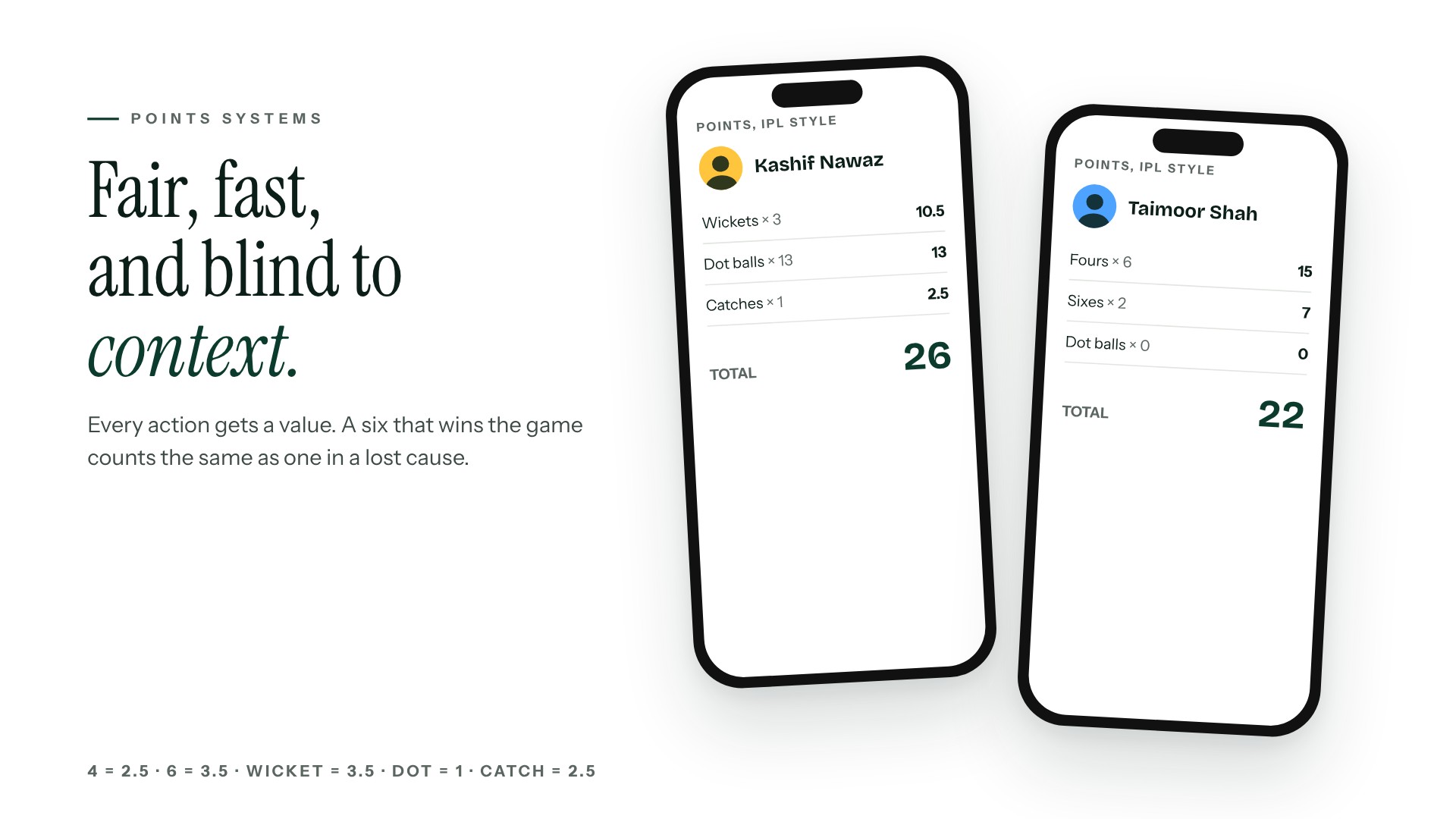
A player of the match points system gives every action on the scorecard a value and adds them up. The best known example is the IPL’s most valuable player award, the season version of the same idea. Its points are 2.5 for a four, 3.5 for a six, 3.5 for a wicket, 1 for a dot ball, and 2.5 for a catch or a stumping.
The strength of a points system is that it is fair, fast and the same for everyone. Anyone can check the working.
The weakness is that it has no sense of context. A six off the last ball of a lost match earns the same as a six that won the game. That is why the most valuable player in cricket on a points table is not always the player who decided the matches.
Can A Player From The Losing Team Win?
Yes. The player of the match award can go to a player on the losing side, and it sometimes does, usually when one player has a huge game and the rest of the team does not keep up. Joint awards are also possible, though rare.
How Should A League Decide Player Of The Match?
Here is a method any league can use, and one that players can trust.
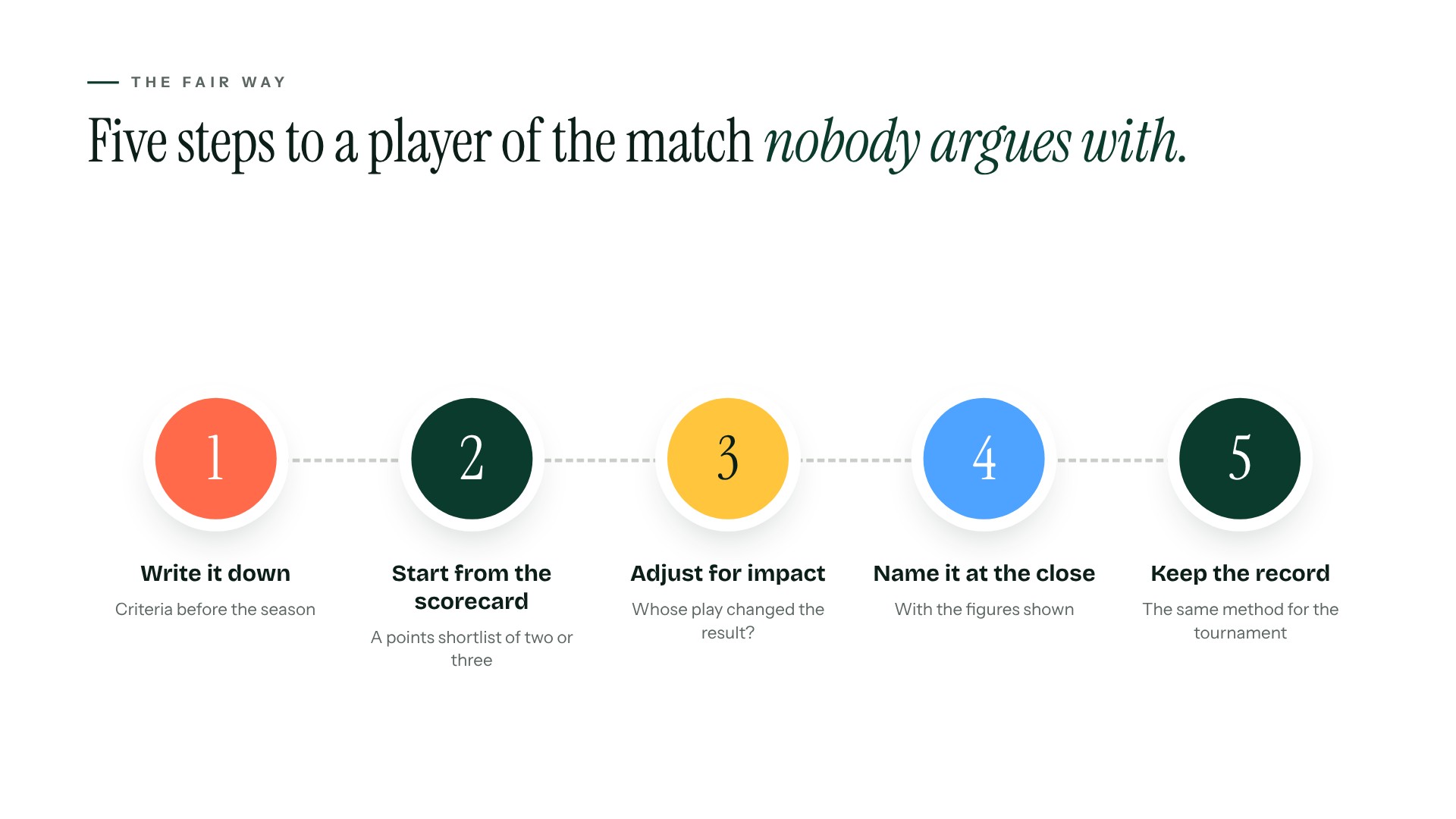
- Write the criteria down before the season. Say what the award rewards: contribution to the result, with extra weight for the phase and the pressure.
- Start from the scorecard. Use a simple points system to make a shortlist of the top two or three performances.
- Adjust for impact. Whoever picks the award looks at the shortlist and asks one question: whose performance changed the result most?
- Name it at the close of play. Announce it with the figures, so everyone can see why.
- Keep the record. The same method then decides player of the tournament, with no arguments at the awards night.
How Crickslab Helps
When every ball is scored in the free Crickslab app, the figures for the shortlist are already there at the last ball, on each player’s profile and on Match Central. When the award is named, Artwork Studio makes the player of the match poster from the player’s own figures and can post it straight away. For awards of the day, the week or the month, it suggests the best performers from the scorecards, best first, and you choose the winner. Running a full season? See how to organise a cricket tournament.

Myths And Facts
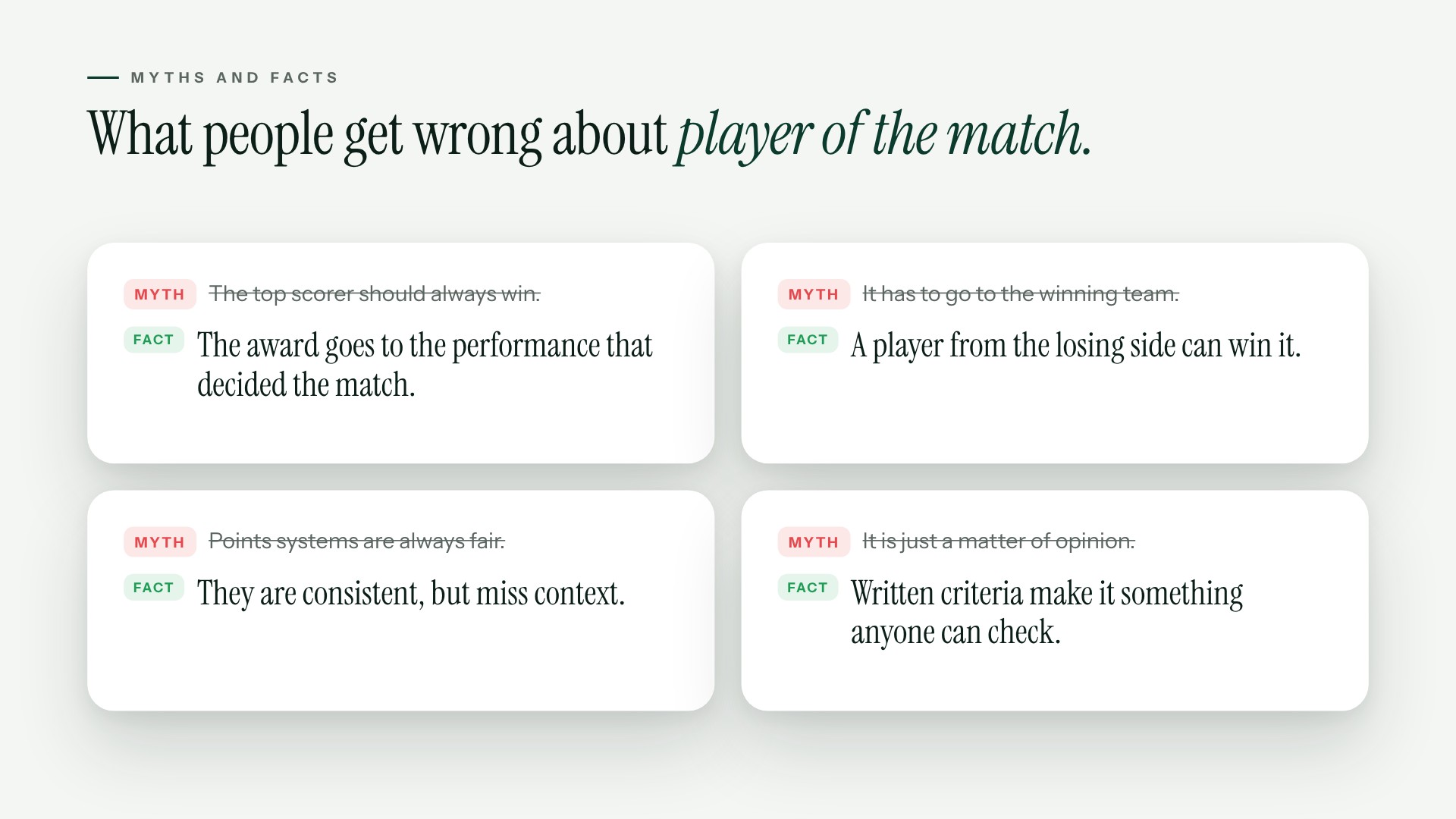
Myth: the top scorer should always win. Fact: the award is meant to go to the performance that decided the match, which is often a bowling spell.
Myth: the award has to go to the winning team. Fact: a player from the losing side can win it.
Myth: points systems are always fair. Fact: they are consistent, but they miss context unless a person checks the shortlist.
Myth: it is just a matter of opinion. Fact: it does not have to be. Written criteria and scorecard figures make it something everyone can check.
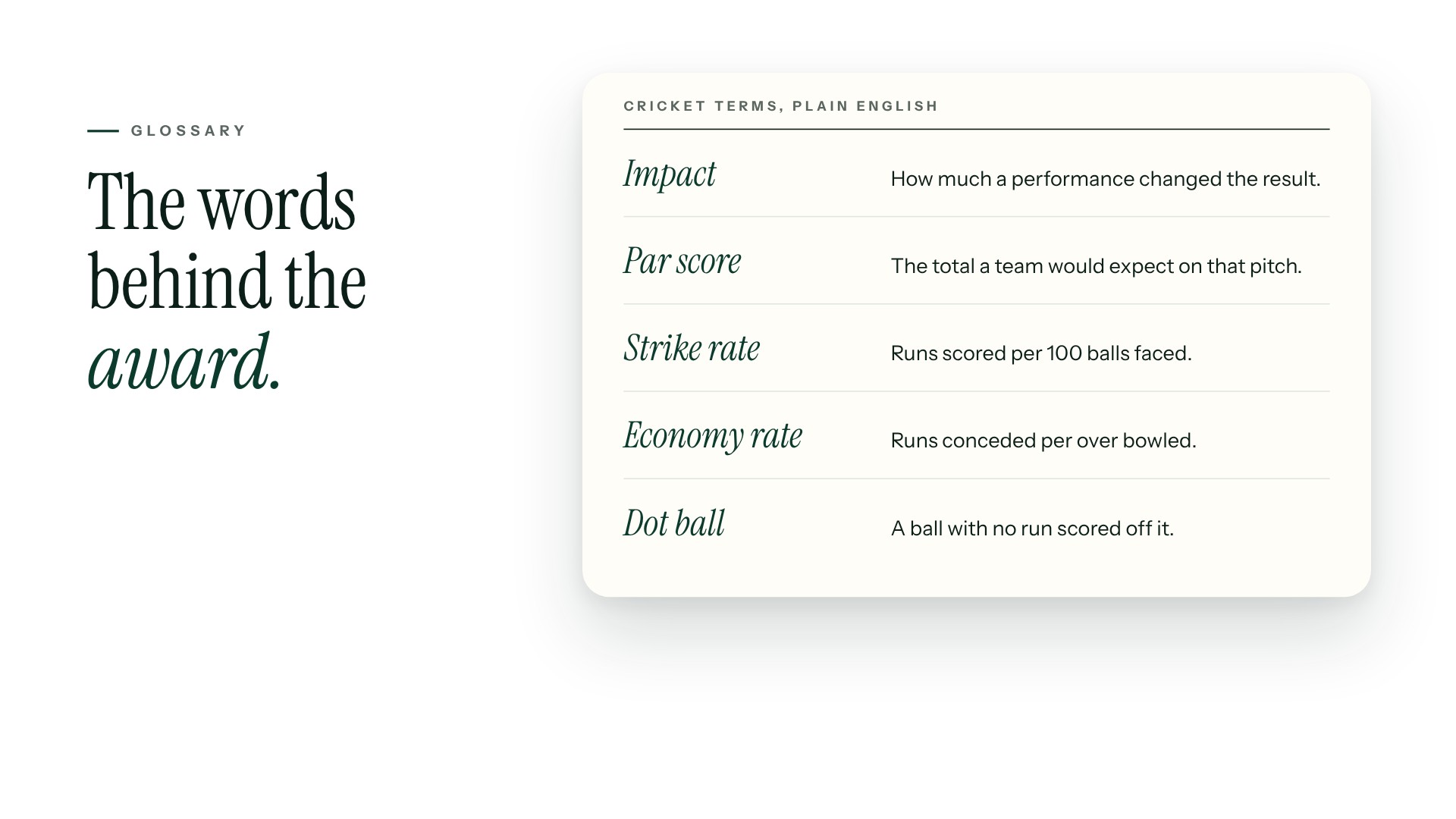
Glossary
Impact: how much a performance changed the result of the match.
Par score: the total a team would usually be expected to make on that pitch, in those conditions.
Strike rate: runs scored per 100 balls faced. See the free batting strike rate calculator.
Economy rate: runs conceded per over bowled. See the free economy rate calculator.
Dot ball: a ball with no run scored off it.
Score every ball in the free Crickslab app and your player of the match shortlist is ready at the last ball, with the poster one press away. Running a league? Book a demo.
Frequently asked questions
How is player of the match decided in cricket?
A person or panel chosen by the competition picks the player whose performance did the most to decide the result. Who picks it and how varies by competition.
Is player of the match the same as man of the match?
Yes. They are two names for the same award. Many competitions now use player of the match.
Can the player of the match come from the losing team?
Yes. It is less common, but the award can go to a player on the losing side.
What is the fairest way to choose player of the match?
Write the criteria down before the season, use the scorecard to make a shortlist, then pick the performance that changed the result most and announce it with the figures.