For national boards and federations
Cricket board management software
A national cricket board is not a large club. It runs registration for an entire country, sanctions competitions it does not itself operate, answers to an ICC reporting calendar, and carries the reputational cost when a scorecard is wrong on television.
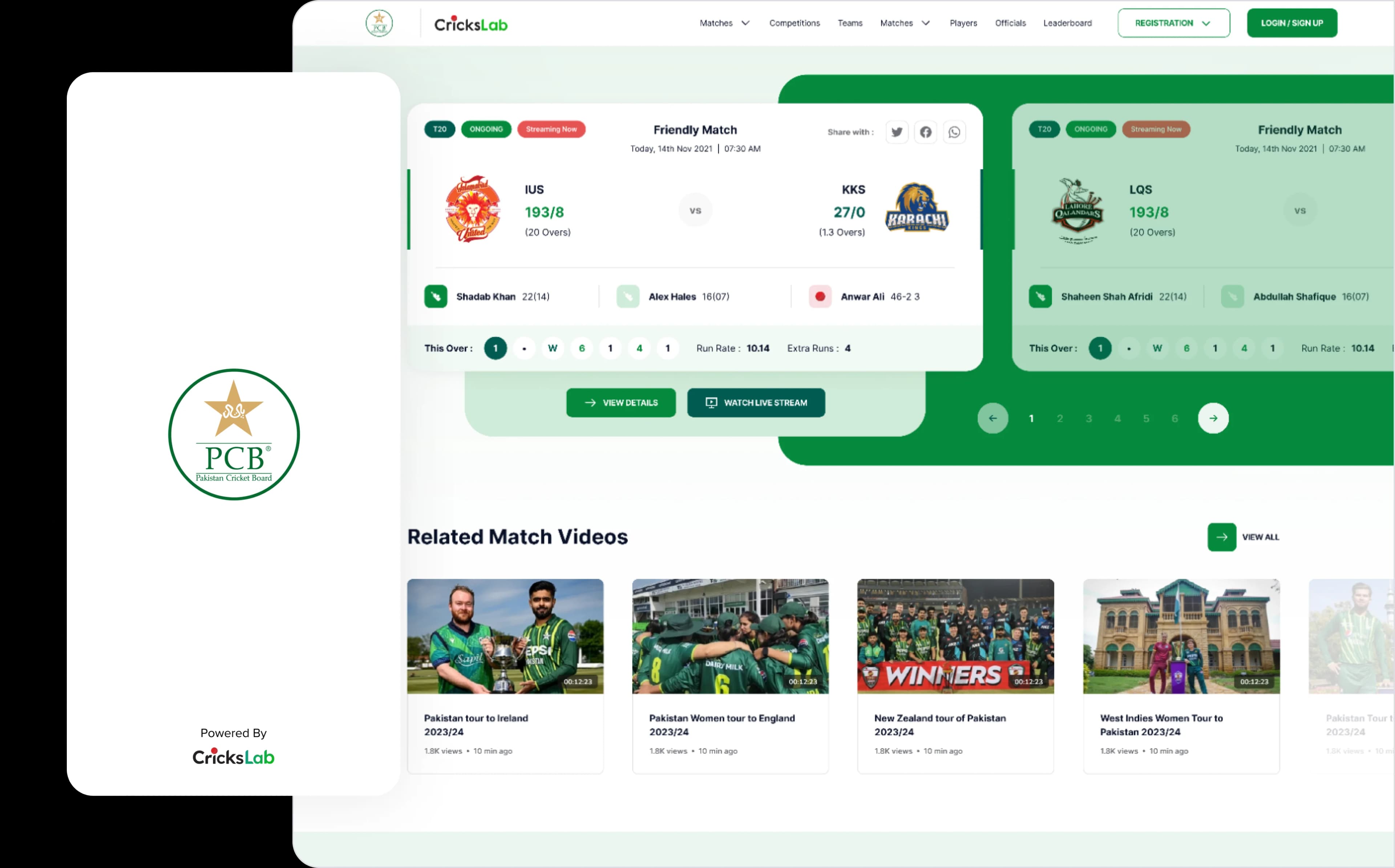
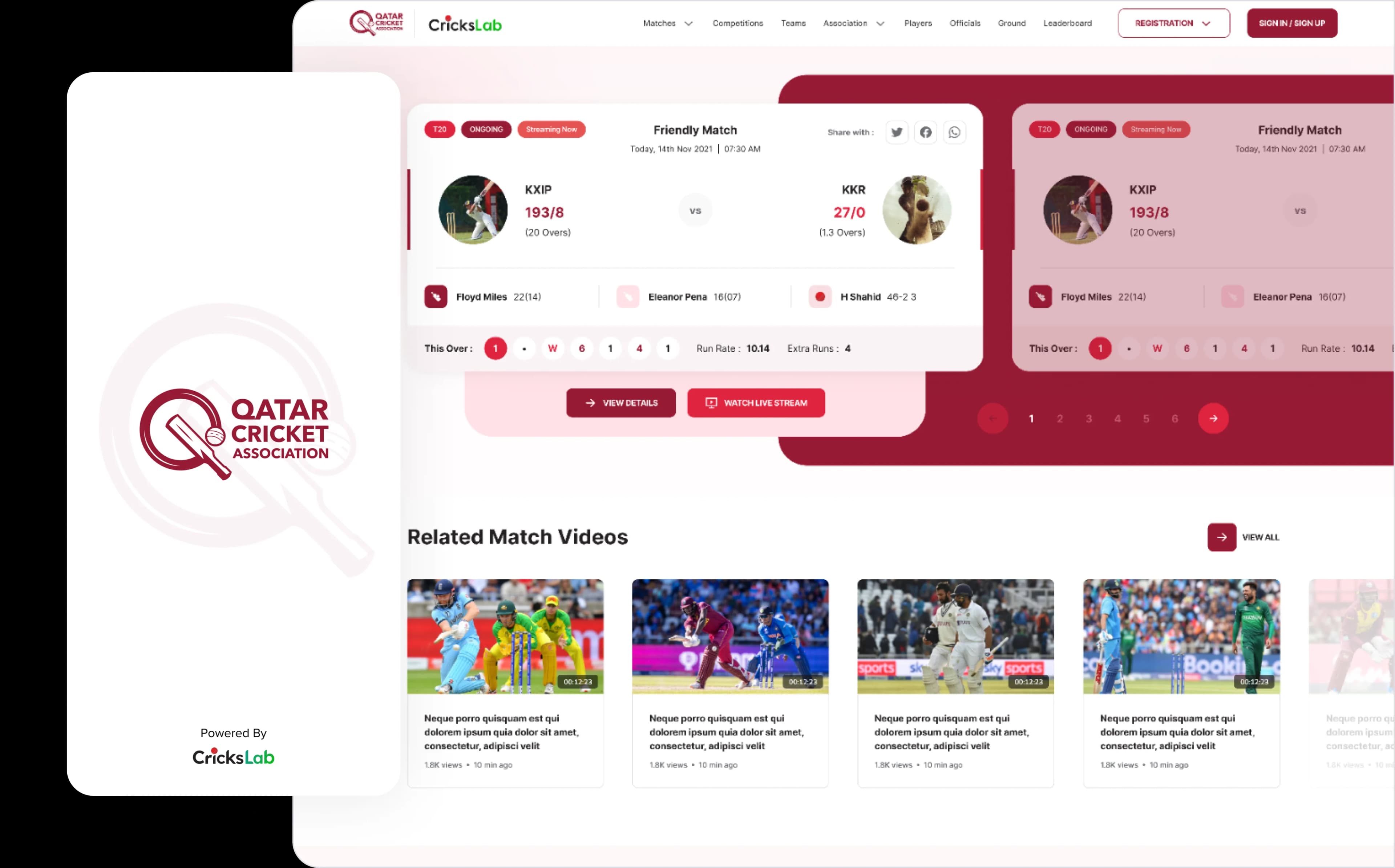
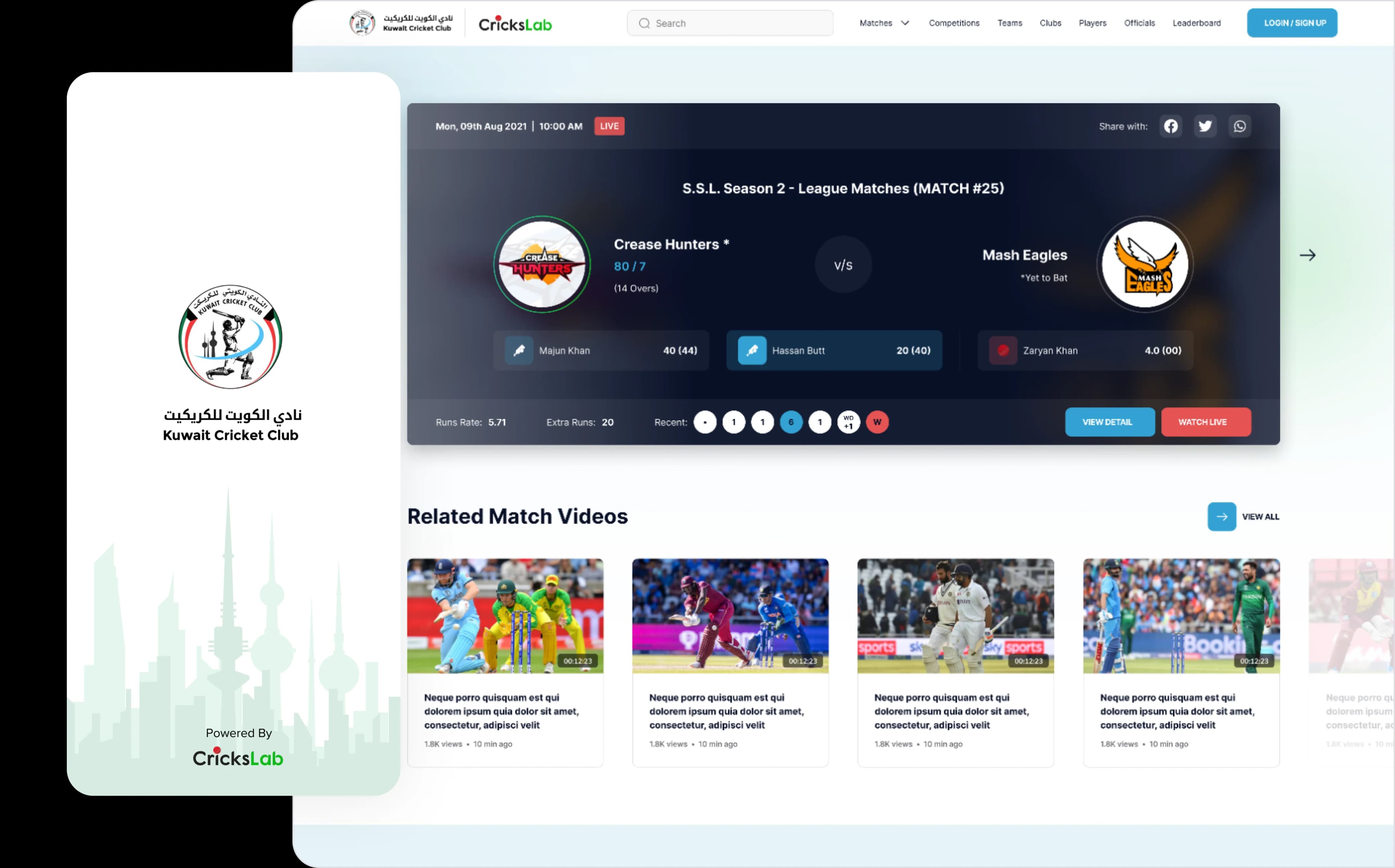
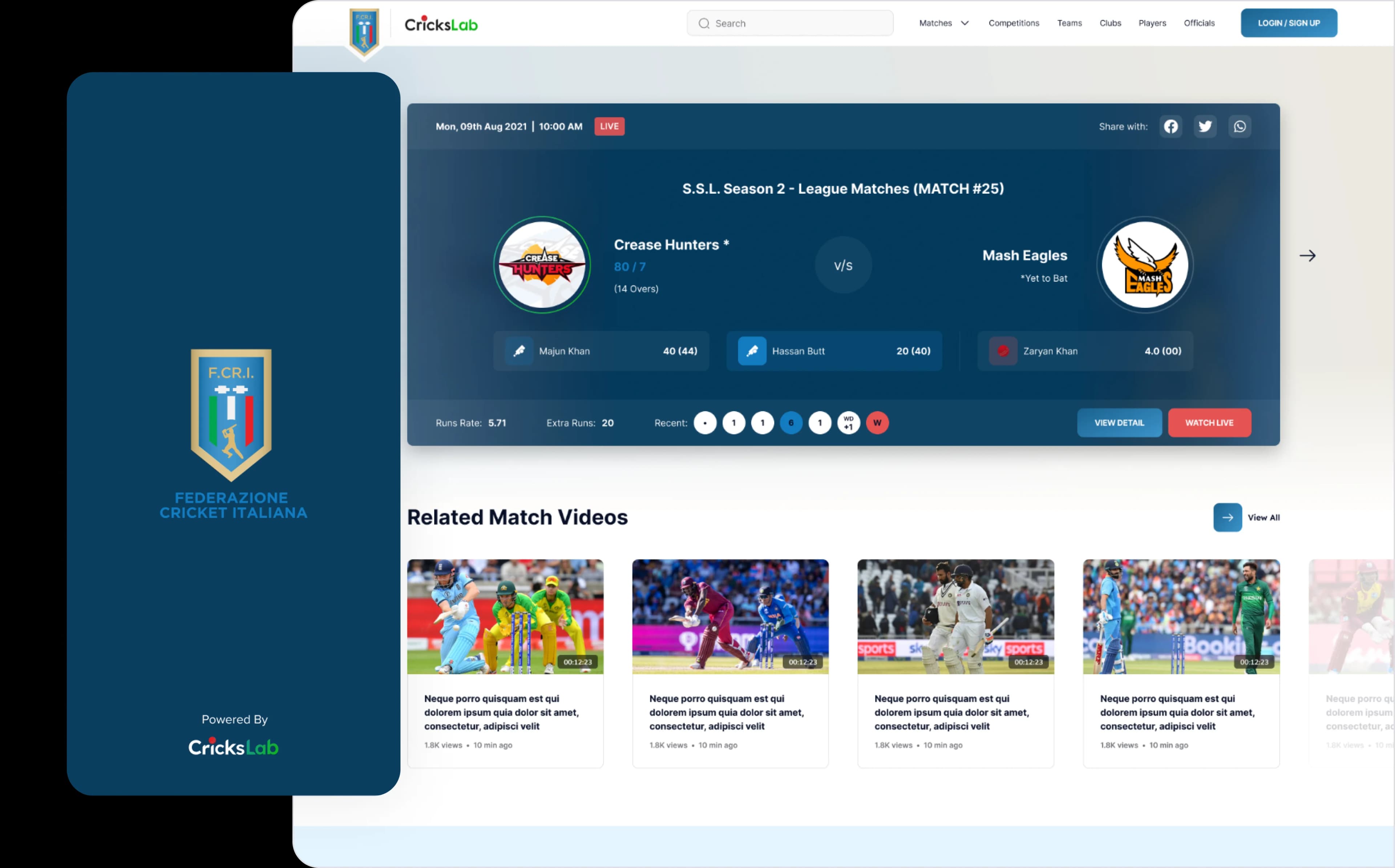
Crickslab is built for that job. The Pakistan Cricket Board runs on it, and so do Kuwait Cricket Club, the Qatar Cricket Association and the Italian Cricket Federation. All four match centres are public, and every one of them is linked from this page.
What a board actually needs, and where club software stops
Most software sold as cricket management software is club software. It assumes one organisation, one set of teams, one season, one administrator. A board has none of those assumptions.
| What the board has to do | What club software assumes |
|---|---|
| Register every player in the country once, under one identity, across every level | Each club keeps its own player list |
| Sanction competitions run by regions and affiliates it does not control day to day | The organisation runs its own fixtures |
| Hold the record of truth when a region and a club disagree about a result | Whoever scored the match is right |
| Report to the ICC and to government sport bodies on a fixed calendar | Reporting means exporting a spreadsheet |
| Put a live scorecard on national television without a delay or a correction | Live scores are a fan feature |
| Keep national player data inside a jurisdiction it can name | Data lives wherever the vendor hosts it |
Crickslab is designed around the first column. That is the whole difference.
One national registry, not many separate lists
Registration is where a board either has control of its game or does not.
Crickslab gives a board a single national player registry. A player is registered once and keeps the same identity through age group cricket, club cricket, regional cricket and the national side. Transfers between clubs move the record rather than duplicating it. Eligibility rules, age verification and registration windows are enforced by the board at the top and applied by every affiliate underneath.
The Pakistan Cricket Board runs this at national scale, across more than 200,000 registered players.
What a board gets from it
- One identity per player, no duplicate records across regions
- Board set eligibility and age group rules applied everywhere automatically
- Registration windows, fees and approvals handled by the board, executed by affiliates
- Transfer and clearance workflow with an audit trail
- Reporting on participation that comes from the live registry rather than a survey
Competition structures the way boards actually organise cricket
A board rarely runs a single flat league. It runs a hierarchy: national competitions, regional competitions, age group competitions and affiliate competitions, each with its own rules and each rolling up into the same record.
Crickslab models that hierarchy directly. A board can create a competition, delegate its operation to a region or an affiliate, and keep the standings, points, scorecards and player records inside the national system. Points systems, over rates, penalty points, bonus points, net run rate and Duckworth Lewis Stern are configured per competition rather than assumed.
Delegated administration is the part that matters most. Regional officers get the rights to run their competitions and nothing beyond them. The board keeps the ability to override, correct and audit.
Scoring that is good enough to put on television
Board cricket ends up on a broadcast. That sets a different standard from a club scoring app.
- 1Ball by ball scoring on iOS, Android and web, with offline capture and sync for grounds with poor connectivity
- 2Broadcast graphics driven from the same scoring feed, so the overlay and the scorecard cannot disagree
- 3Live streaming with scoring integrated rather than bolted on
- 4Scorer roles, match official sign off and post match correction with a record of who changed what
- 5The board, not the scorer, holds the final version of the scorecard
This is the point that separates a board platform from a community scoring app. In a community app the scorer is the authority. On a board platform the board is the authority and the scorer is a role inside it.
White label, so the board keeps its own brand
Boards do not want their players registering on a vendor's brand. Crickslab runs as a white label on the board's own domain, with the board's identity, and the board's terms. The public sees the board, not the software vendor.
Reporting, governance and the audit trail
A board is accountable to the ICC, to a government sport ministry, to member regions and often to a public broadcaster. Crickslab is built so that the answers come out of the system rather than out of a spreadsheet somebody maintains privately.
- Participation reporting by region, age group, gender and format, drawn from the live registry
- Competition and match reporting with fixture completion, over rates and disciplinary records
- Role based access, so a regional officer, a selector, a match referee and a finance officer each see only what their role allows
- Change history on registrations, results and competition configuration
- Export in open formats, so a board can leave with its own data
Boards and organisations already on Crickslab
Four national deployments, each with a public match centre you can open now.

Pakistan Cricket Board
National board, Pakistan
- Matches
- 10k+
- Competitions
- 1k+
- Teams
- 5k+
- Players
- 200k+

Qatar Cricket Association
National association, Qatar
- Matches
- 1k+
- Competitions
- 100+
- Teams
- 500+
- Players
- 7k+

Kuwait Cricket Club
National body, Kuwait
- Matches
- 10k+
- Competitions
- 200+
- Teams
- 1k+
- Players
- 15k+

Italian Cricket Federation
National federation, Italy
- Matches
- 2k+
- Competitions
- 100+
- Teams
- 100+
- Players
- 5k+
If your board wants a reference conversation with an existing board customer before it commits, ask for one on the demo call. That is a normal request and it is the right one to make.
Replacing a platform you already have
Most boards arriving at this page are not starting from nothing. They are on CricHQ, which went offline in August 2024, or on a community scoring app that was never designed to hold a national registry, or on a set of spreadsheets that one person understands.
Crickslab takes historical data in: player records, club and team structures, fixtures and completed match results, in the formats a board is likely to have them. Migration is scoped before anything is committed, so a board knows what will carry across and what will not before it signs.
If you are specifically leaving CricHQ, read the CricHQ alternative page, which covers that move in detail.
What it costs
Board and association deployments are quoted rather than sold from a price list, because the scope varies with the size of the registry, the number of competitions, whether broadcast is included and where the data has to be hosted.
What a board should expect to be asked on the first call
- How many registered players
- How many affiliates
- How many competitions per season
- Whether live streaming and broadcast graphics are in scope
- Any data residency requirement
Published prices for broadcaster, club and academy plans are on the pricing page.
Talk to our team
See it run against your own competition structure
The useful demo is not a feature tour. It is Crickslab configured against your competition structure, with your registration rules and your reporting calendar, so you can judge it on your own cricket.