How Crickslab Delivered Smart Cricket Ticketing for Asia Cup Rising Stars 2025 in Qatar
How the Crickslab cricket ticketing system ran app and stadium counter ticket sales and QR gate entry for DP World Asia Cup Rising Stars 2025 in Doha.
Smart Cricket Ticketing System
How Crickslab Ran Asia Cup Rising Stars 2025 in Qatar
In November 2025, Doha hosted eight teams for the DP World Asia Cup Rising Stars. Most fans bought their seats in the official Qatar Cricket Association app and walked in with a QR code on their phone. Fans who turned up without a ticket bought one at the stadium counters, on the same system.
That app runs on the Crickslab cricket ticketing system. This is what smart ticketing for cricket looks like at an international event: how we set it up, how it worked on match day
Quick facts
Event: DP World Asia Cup Rising Stars 2025, an Asian Cricket Council tournament
Venue: West End Park International Cricket Stadium, Doha
Dates: 14 to 23 November 2025
Ticket seller: Qatar Cricket Association
Sales channels: the Cricket Qatar app and the ticket counters at the stadium
Ticketing platform: Crickslab
What Crickslab delivered: app and counter ticket sales, a unique QR code on every ticket, QR check in at the gate, live sales and entry dashboards, and a team on site for every match day
Why a big cricket event needs a cricket ticketing system
A lot of cricket outside the big Full Member grounds still sells tickets the old way. A booth at the gate, paper tickets, cash, and a list on a clipboard.
That works for a club final. It does not work for an international tournament with India A, Pakistan Shaheens and six more teams in town.
Paper tickets can be copied. Queues build up at the gate before the first ball. Nobody knows how many seats are left in each block until the day is over. And the organiser learns nothing about who came.
A cricket ticketing system fixes all four. Tickets are sold online, each one carries a code that can only be scanned once, entry is quick, and the organiser sees every sale and every scan as it happens.
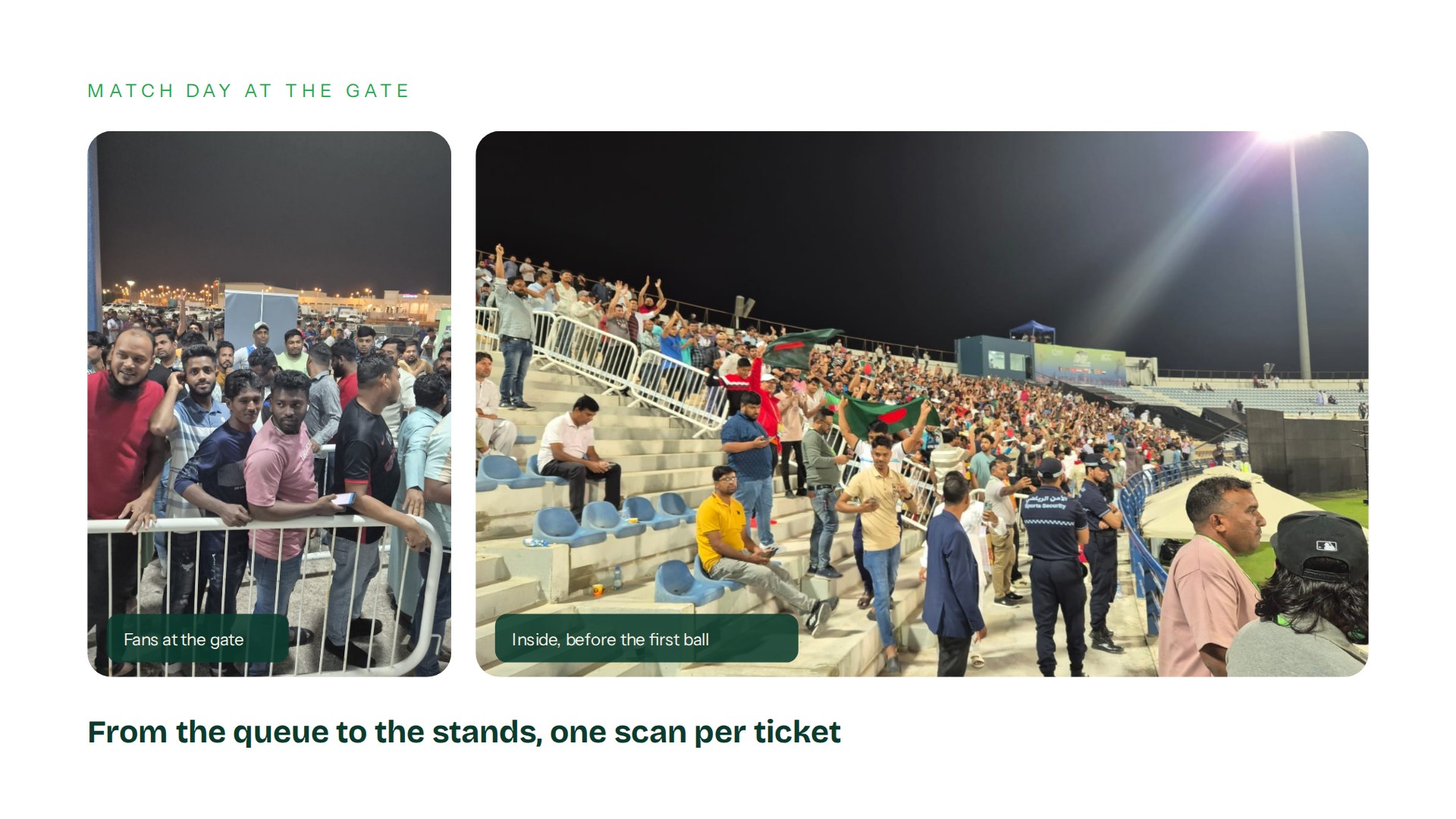
The event: Asia Cup Rising Stars 2025 in Doha
The 2025 Asia Cup Rising Stars was played from 14 to 23 November 2025 at the West End Park International Cricket Stadium in Doha, a ground built for more than 13,000 fans.
Eight teams took part: India A, Pakistan Shaheens, Bangladesh A, Sri Lanka A, Afghanistan A, Oman, the UAE and Hong Kong. The Peninsula confirmed the tournament was open to the public with ticketed entry.
The big dates were easy to spot. India A against Pakistan Shaheens on 16 November. Both semi finals on 21 November. The final on 23 November, where Pakistan Shaheens beat Bangladesh A in a super over after both sides finished on 125.
Matches like these bring crowds in waves, with most fans arriving in the last hour before play. That is exactly when a gate system is tested.
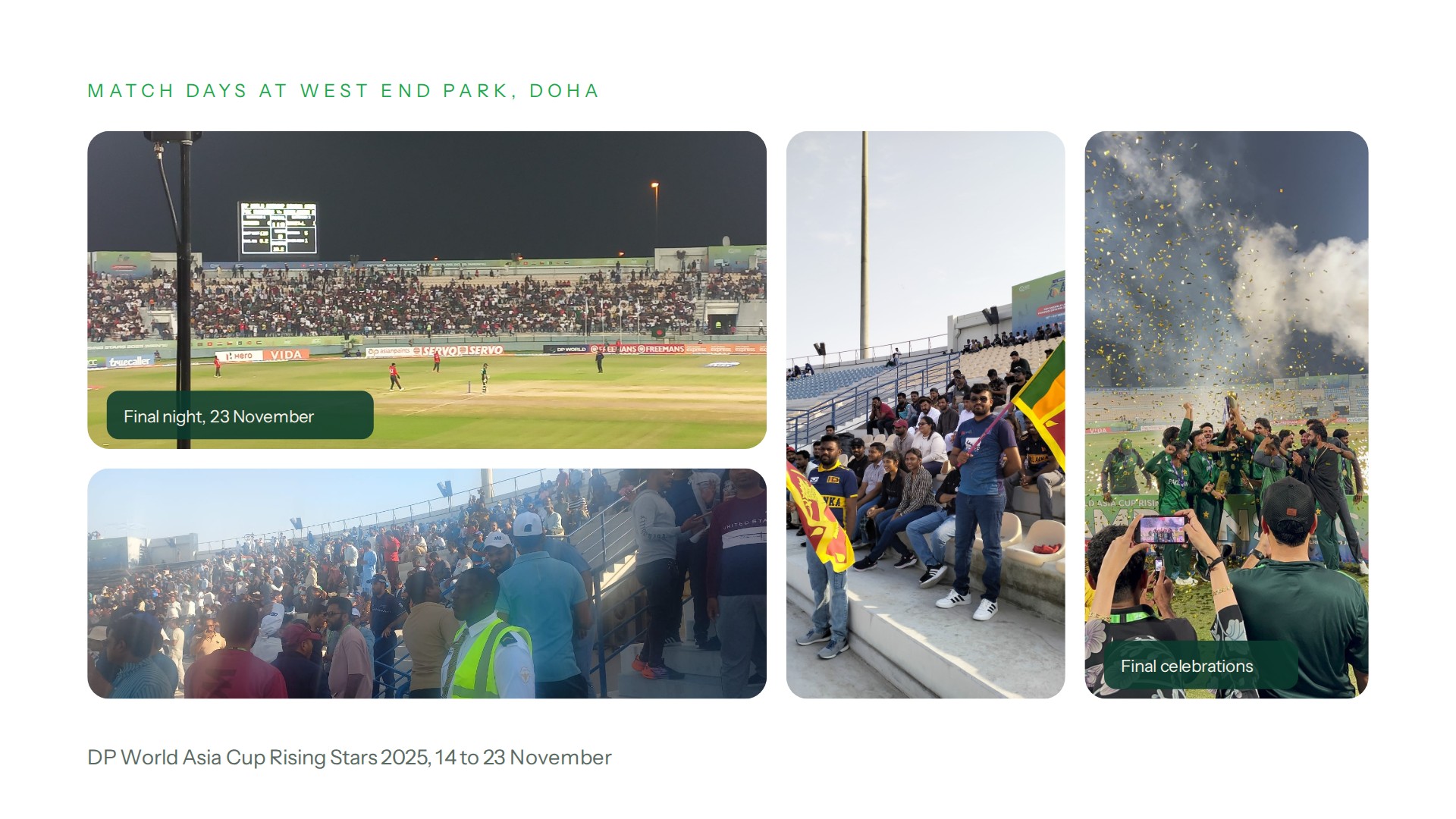
How the Crickslab cricket ticketing system was set up
The Qatar Cricket Association already ran its domestic cricket on Crickslab, so the ticketing was switched on inside the same platform. No new vendor, no new app for fans to find.
Here is what QCA could set up before tickets went live:
Matches and dates. Every fixture was created with its date, time and venue, so fans could pick the exact match they wanted.
Ticket categories and prices. Each match had its own categories and prices in Qatari riyal, from general seats to premium areas.
Seats and limits. Seating blocks and the number of tickets in each were set per match, with a limit on how many tickets one person could buy.
QR codes. Every ticket had a unique QR code that worked once.
Gate check in. QR ticket check in ran at the venue gates, and every scan was logged.
Once this was in place, QCA announced it to fans. Its post on X told them to “get your tickets now through the QCA App” on iOS and Android.
The fan journey with a smart cricket ticketing system
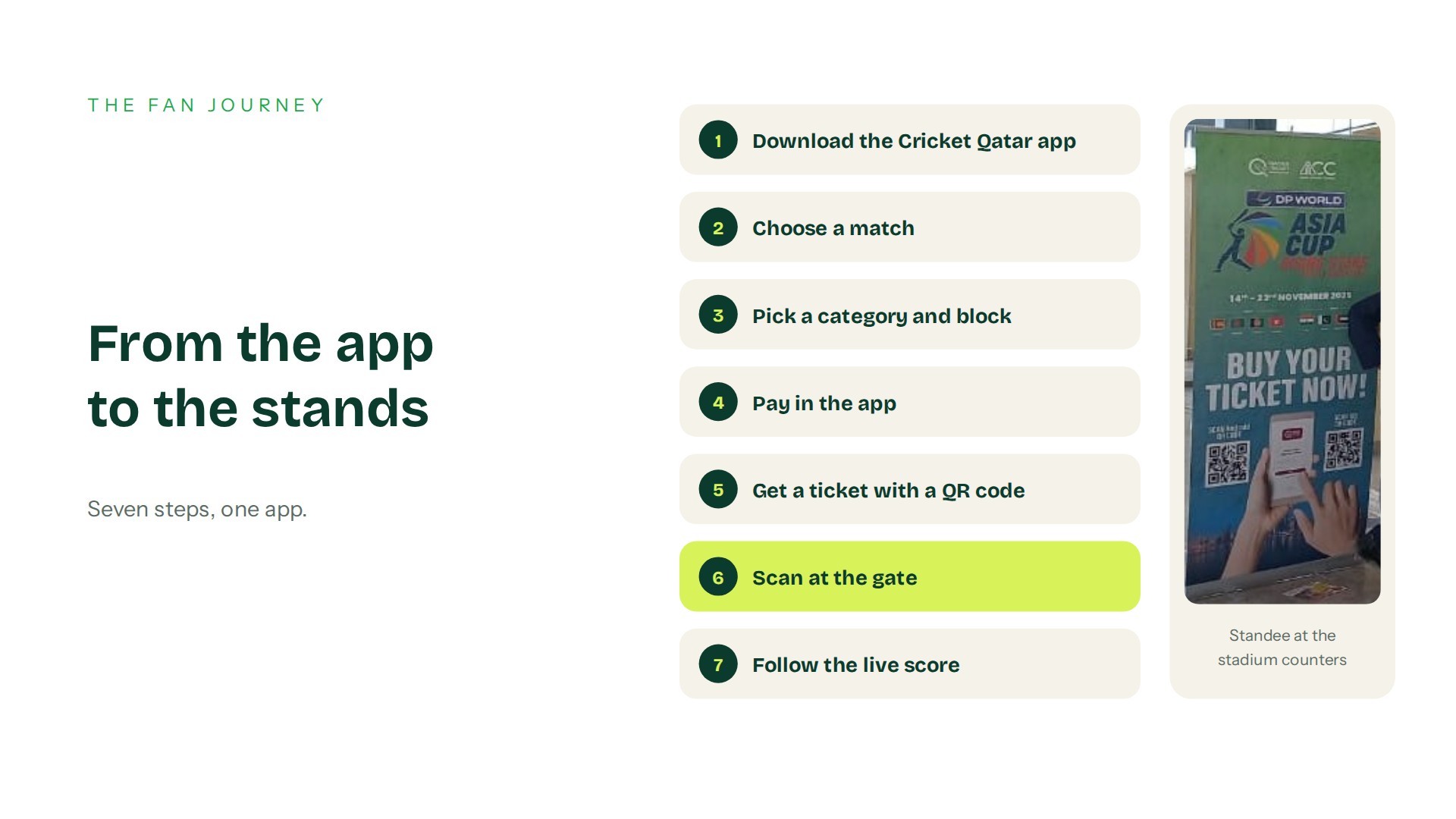
That is the point of a cricket match ticket booking app built into the official app.
For a fan in Doha, buying a ticket took a few taps.
1. Download or update the Cricket Qatar app.
2. Open the tournament and choose a match.
3. Pick a ticket category and a seat block.
4. Pay inside the app.
5. Get the ticket in the app, with its own QR code.
6. Show the QR code at the gate and walk in.
7. Follow the live score in the same app during the match.
The last step matters more than it looks. The ticket, the fixtures and the live scores all sit in one app. A fan who bought a ticket for the India A match was one tap away from the next fixture.
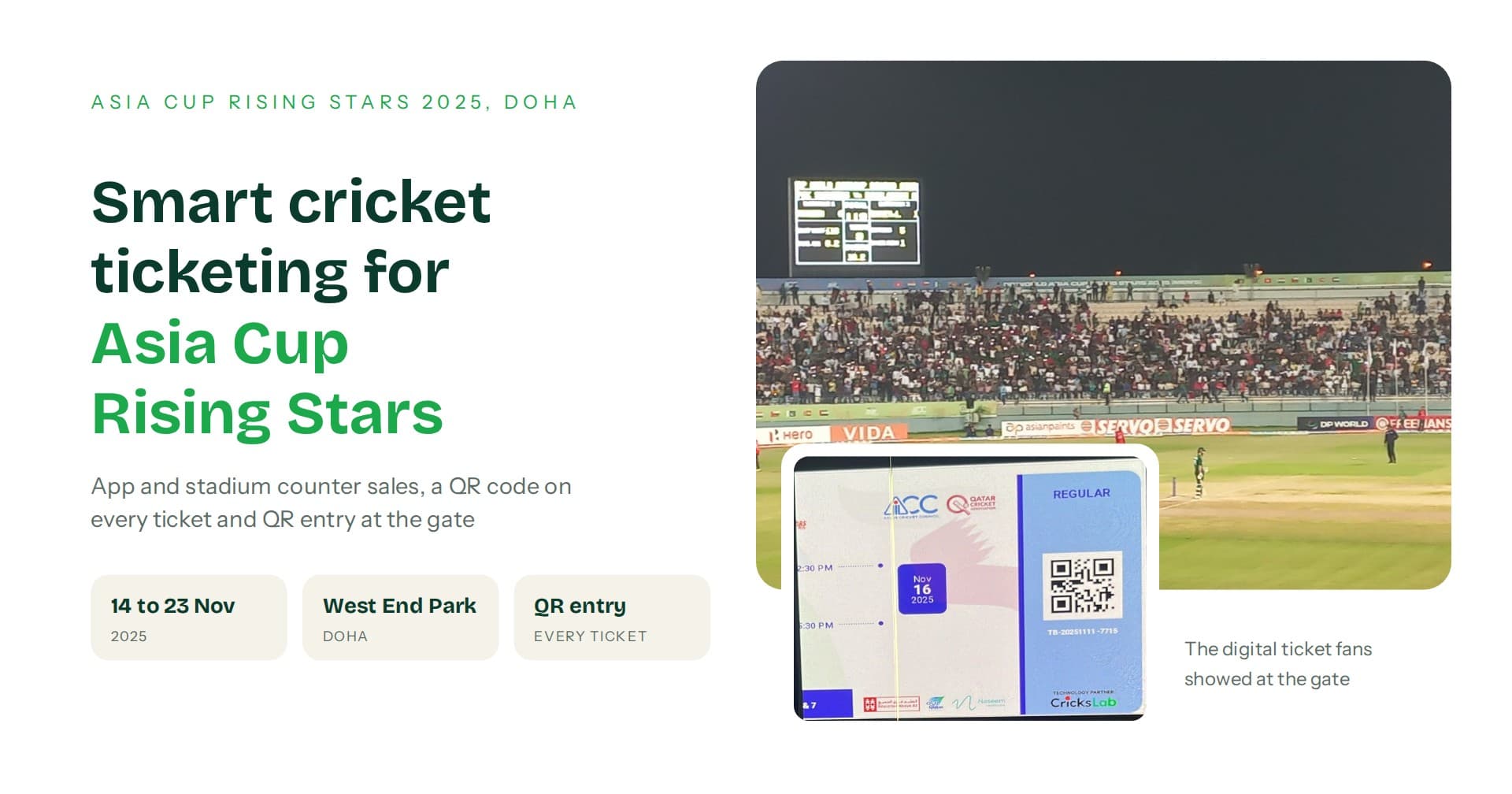
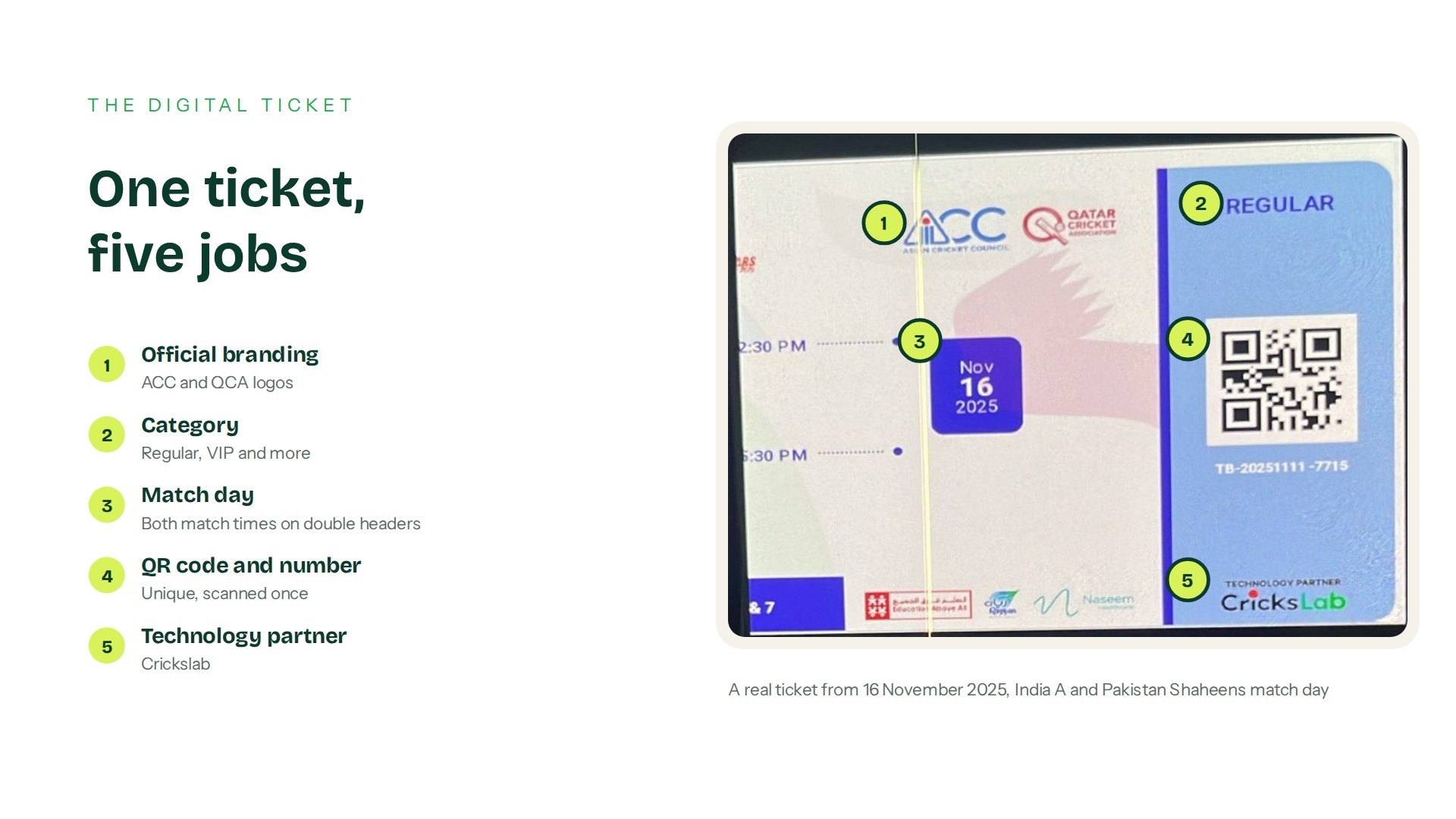
What the digital ticket looked like
Every ticket was built to be checked in two seconds by a steward and understood in two seconds by a fan.
Event branding. The Asian Cricket Council and Qatar Cricket Association logos sat at the top, so fans knew it was an official ticket.
Category. The ticket type, such as Regular, was printed in large letters on the side.
Match day. The date sat in the middle, with the start time of each match that day. On double header days, one ticket covered both matches.
QR code and ticket number. Every ticket had its own QR code and a unique ticket number, so a copied ticket would not get through the gate twice.
Technology partner. Each ticket carried the line “Technology partner Crickslab”.
Ticket counters at the stadium, on the same cricket ticketing system
Not every fan buys online. Many decide on the day, or come with friends who have no ticket yet.
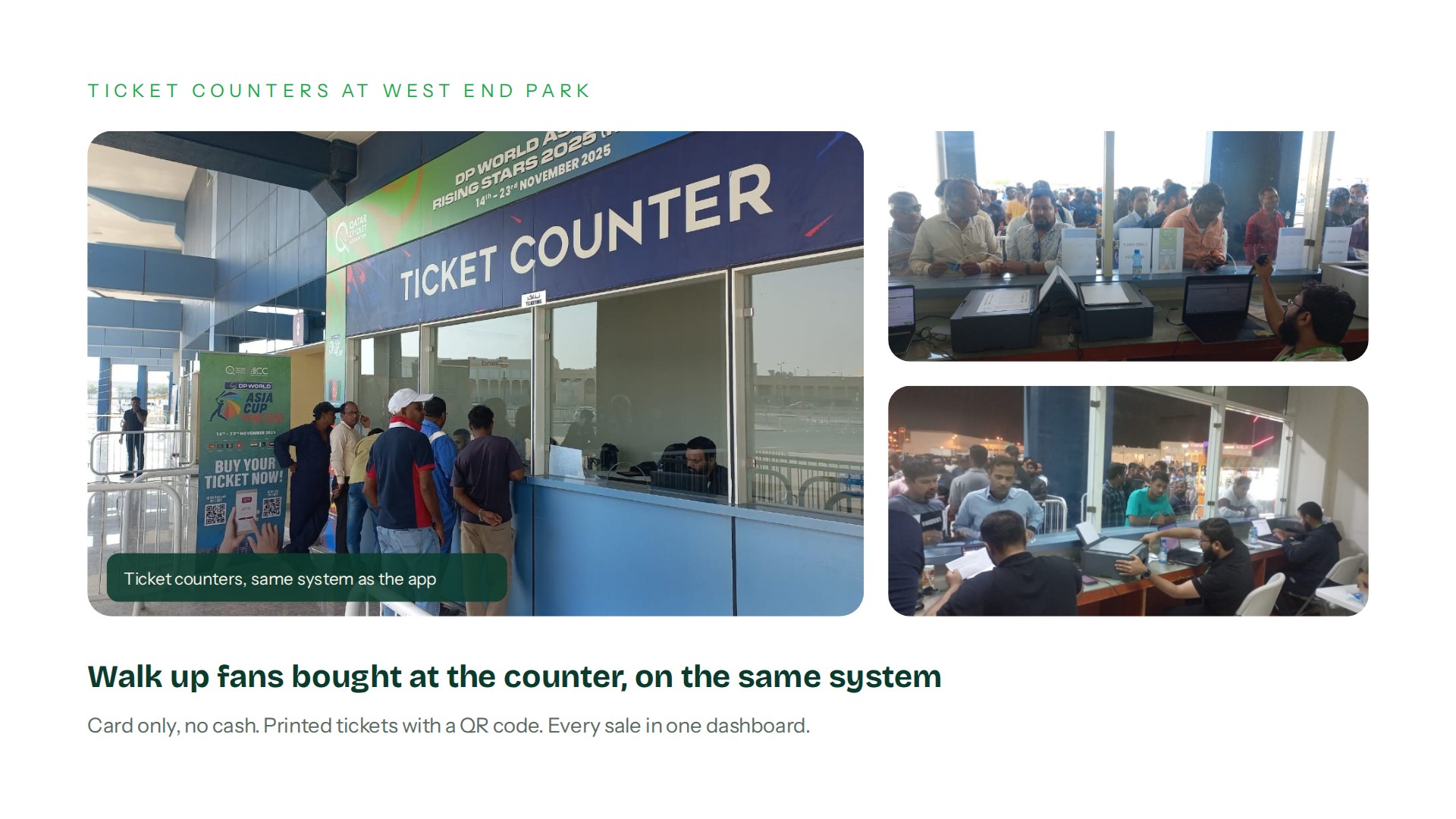
So the stadium had ticket counters too, and they ran on the same Crickslab system as the app. Our team worked the counters with laptops and ticket printers. Payment was by card only, no cash, which kept the queues moving and the money easy to reconcile.
A ticket bought at the counter carried the same kind of QR code as a ticket bought in the app. Next to the counters, standees with QR codes told fans they could skip the line and “buy your ticket now” in the app.
For QCA, it made no difference where a ticket was sold. Every sale, from the app or the counter, landed in the same dashboard.
Crickslab on the ground
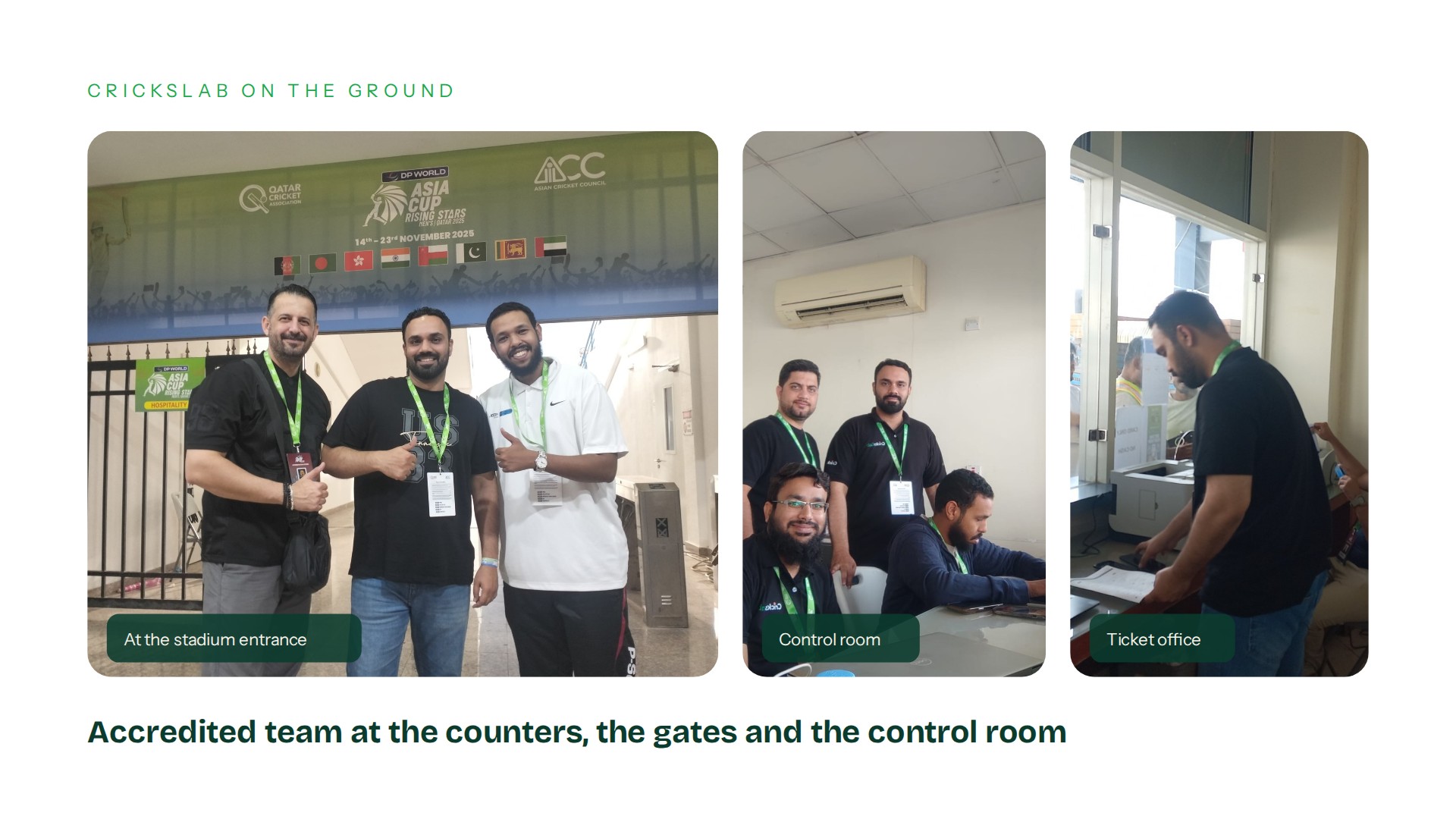
Software alone does not run a match day. Our team was accredited for the tournament and was at West End Park on every match day, at the ticket counters, at the gates and in a control room inside the stadium.
When crowds built up before the big matches, the team could see sales and scans live and help where the queues were longest.
What QCA saw behind the scenes
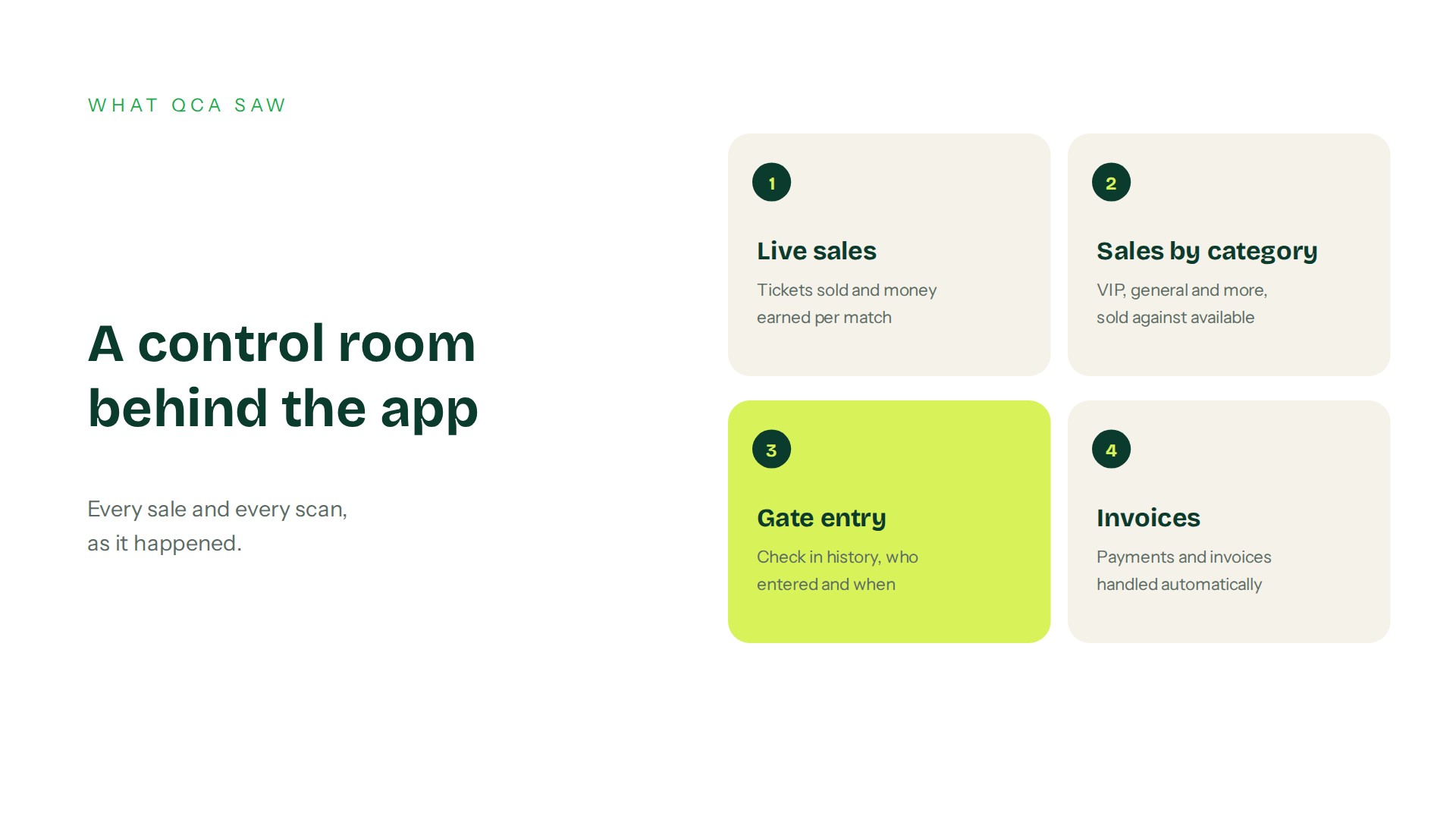
While fans saw a simple app, the QCA team had a full control room.
Live sales. A dashboard showed total tickets sold and money earned for every match, updated as each sale came in.
Sales by category. VIP, general and other ticket types were tracked one by one, with a bar showing sold against available.
Gate entry. Check in history showed who had entered and when, so the team could see how full the ground was before the first ball.
Invoices. Payments and invoices were handled automatically, so nobody had to match receipts by hand after the event.
This is the part paper tickets can never give you. After the tournament, QCA can see how many people came to each match, which categories sold first and which matches drew the biggest crowds. That is the starting point for planning the next event.
Why one app beat a separate ticket vendor
Most digital ticketing for sports events comes from general ticket companies, and many organisers hire one for a single tournament. It works, but the fans buy from someone else’s site, the data sits with that company, and it all disappears when the event ends.
Running ticketing inside the association’s own app changes that:
- The fans already had the app from domestic cricket, so there was nothing new to explain.
- The tickets carried Qatar cricket’s name, not a third party’s.
- Every buyer has an account in the app, so QCA can reach them for the next match.
- Ticketing, fixtures and live scores live in one place, run by one team.
- The same cricket ticketing system works for a single big final, a full league season or a bilateral series.
What other boards and organisers can take from Qatar
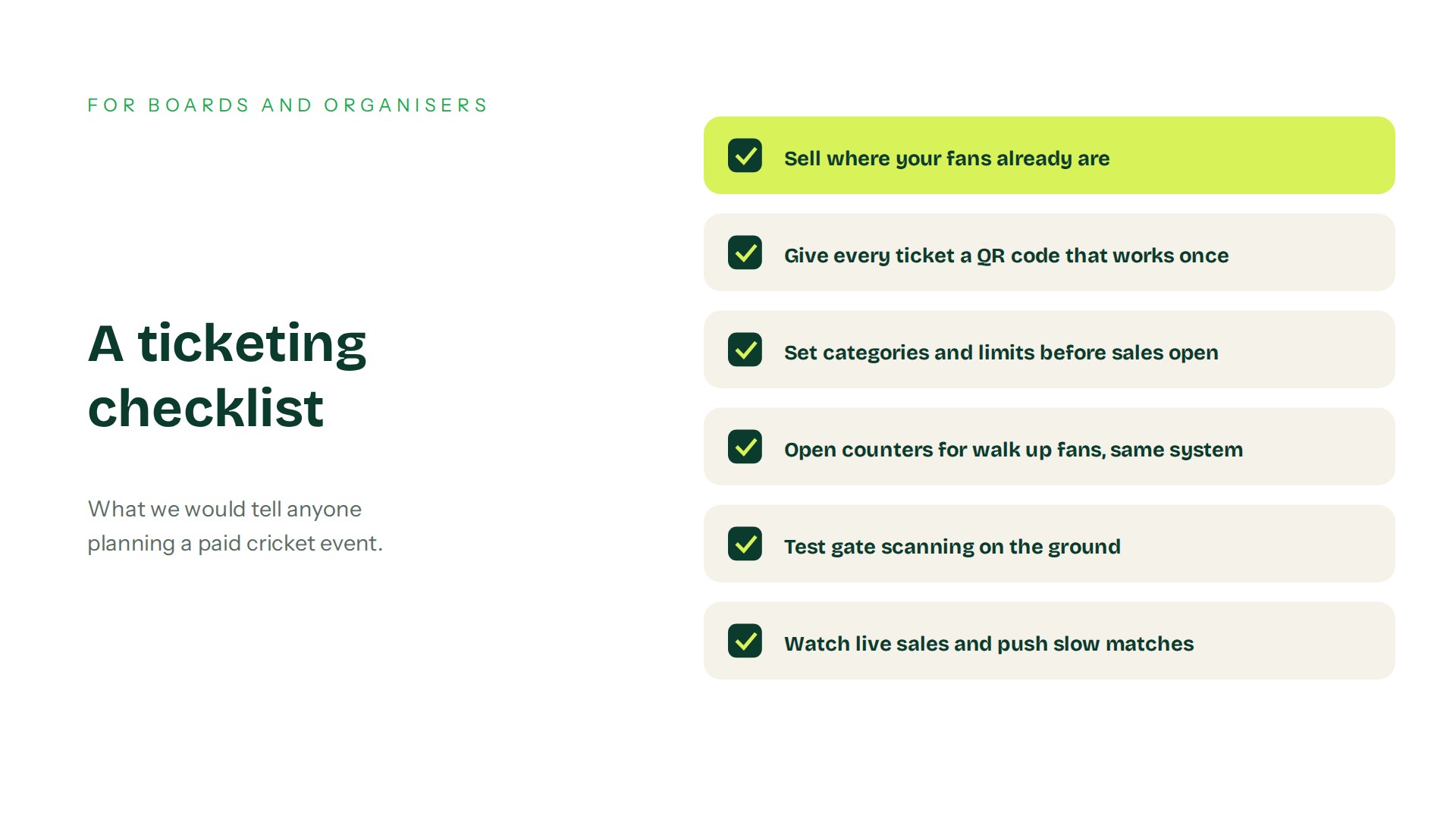
If you are planning a tournament with paying fans, this is the checklist we would give you:
- Sell tickets where your fans already are, ideally your own app.
- Give every ticket a QR code that works once.
- Set categories, seat blocks and purchase limits per match before sales open.
- Test gate scanning on the actual ground before match day.
- Watch live sales so you can push the matches that are not selling.
- Keep the data after the event and use it to plan the next one.
You can see how Crickslab runs ticketing on our ticket booking page. For the wider story of how QCA runs its domestic cricket on Crickslab, read the Qatar Cricket Association case study.
Planning a tournament with paying fans? Book a demo and see the Crickslab cricket ticketing system with your own fixtures.
Frequently asked questions
What is a cricket ticketing system?
A cricket ticketing system lets a board, league or event organiser sell match tickets online, issue each fan a digital ticket with a QR code, scan tickets at the gate and track sales and entry live. Crickslab includes it in the same platform used for fixtures, scoring and live streaming.
How were tickets sold for Asia Cup Rising Stars 2025 in Qatar?
The Qatar Cricket Association sold official tickets for DP World Asia Cup Rising Stars 2025 through the Cricket Qatar app on iOS and Android and at ticket counters at the stadium. Both channels ran on the Crickslab ticketing system.
How did fans enter the stadium?
Each ticket carried a unique QR code in the app. It was scanned at the gate of West End Park International Cricket Stadium, and every scan was logged in the check in history.
Can a cricket ticketing system handle different ticket prices?
Yes. Crickslab lets organisers set categories such as VIP and general, give each its own price and seat blocks, and limit how many tickets one person can buy for each match.
Can other boards and leagues use the same ticketing?
Yes. Any board, association, league or event organiser can run ticket sales, QR entry and sales dashboards on Crickslab, inside their own branded app or website.