News
New Laws Of Cricket Take Effect With 73 Material Changes
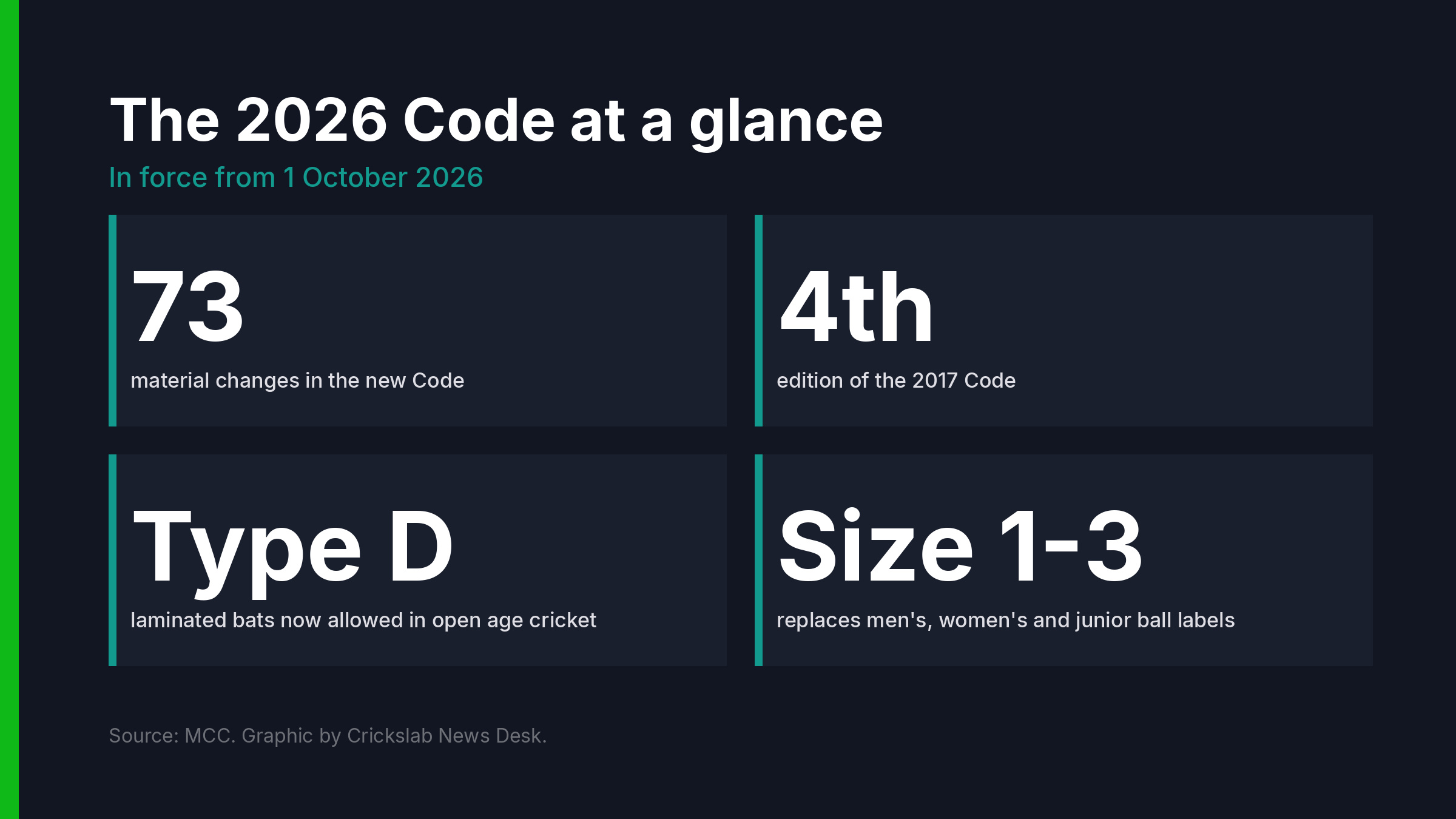
The 2026 edition of the Laws of Cricket comes into force on Thursday, carrying 73 material changes. Laminated bats are now legal in open age cricket. Ball sizes have been relabelled. Their tolerances are tighter. The final over of a day no longer ends the moment a wicket falls. MCC, which owns and writes the Laws, published the edition in February and set 1 October as the start date.
The reach is wide. Clubs, leagues, academies and associations play to the Laws directly, with competition playing conditions layered on top. Several amendments were already in use in the professional game. The ICC and other governing bodies adopted them early through their own playing conditions.
Bats, balls and the close of play
Type D bats are laminated rather than pressed from a single piece of willow. The old text kept them in junior cricket. They are now permitted in most adult cricket. MCC has linked the change to the rising cost of bats.
Ball specifications moved as well. The men's, women's and junior labels have gone. They are replaced by Size 1, Size 2 and Size 3. Limits on size and weight were tightened in work with manufacturers.
End of day procedure in multi day cricket has been rewritten. A wicket in the final over no longer closes play. The incoming batter comes out and the remaining deliveries are bowled, where conditions allow.
Boundary catches and overthrows redrawn
A fielder jumping from outside the boundary now gets one touch of the ball while airborne. After that touch the fielder must land and be wholly inside the field of play. The repeated relay is out. The professional game knows it as the bunny hop.
The overthrow Law has had its largest rewrite in years. The new text separates an overthrow from a misfield. A throw aimed at the stumps that runs away is an overthrow. A ball fumbled near the rope is not. Short running was clarified too, with the penalty reserved for a batter running short in an attempt to deceive. Those two Laws between them account for a good share of the questions umpires field from club captains.
Smaller clarifications sit underneath those. According to myKhel's summary of the new text, a wicketkeeper is no longer penalised for having the gloves ahead of the stumps during the run up, provided the keeper is wholly behind once the ball is released. The same summary lists a wider definition of when the ball is finally settled, and a bar on declaring or forfeiting the final innings of a match. These are the main changes administrators have to brief out:
- Type D laminated bats permitted in open age cricket
- Ball labels replaced by Size 1, Size 2 and Size 3, with tighter tolerances
- Final over of the day completed when a wicket falls, conditions permitting
- One airborne touch allowed on a boundary catch taken from outside the rope
- Overthrows defined separately from misfields
A Delhi classroom two days before the start
The Delhi and District Cricket Association ran an MCC workshop for its umpires on 29 September. Fraser Stewart and Jonny Singer took the session. They worked through video examples and questions from the floor.
"We are delighted to be in Delhi and to engage with the DDCA's umpires ahead of the new Laws coming into effect on October 1," Stewart said.
DDCA president Rohan Jaitley said: "The Laws of Cricket form the foundation of how the game is played and officiated."
The alignment work for boards and leagues
Stewart had set out the thinking when the edition was announced. "It is one thing devising and writing new Laws, but it's perhaps more important to ensure that they are well understood by all the game's stakeholders," he said.
MCC calls this the fourth edition of the 2017 code. Competitions starting after 1 October are the first played under it. Boards and organisers have their own list to work through. Playing conditions need rewriting against the new text. Scoring and match officiating software needs updating. Equipment checks have to account for Type D bats.
Officiating education is the longer job. Umpire and scorer courses run on a season calendar, not a calendar year, so associations in different hemispheres reach the new Code at different points. The Delhi session was one of the last before the start date.